
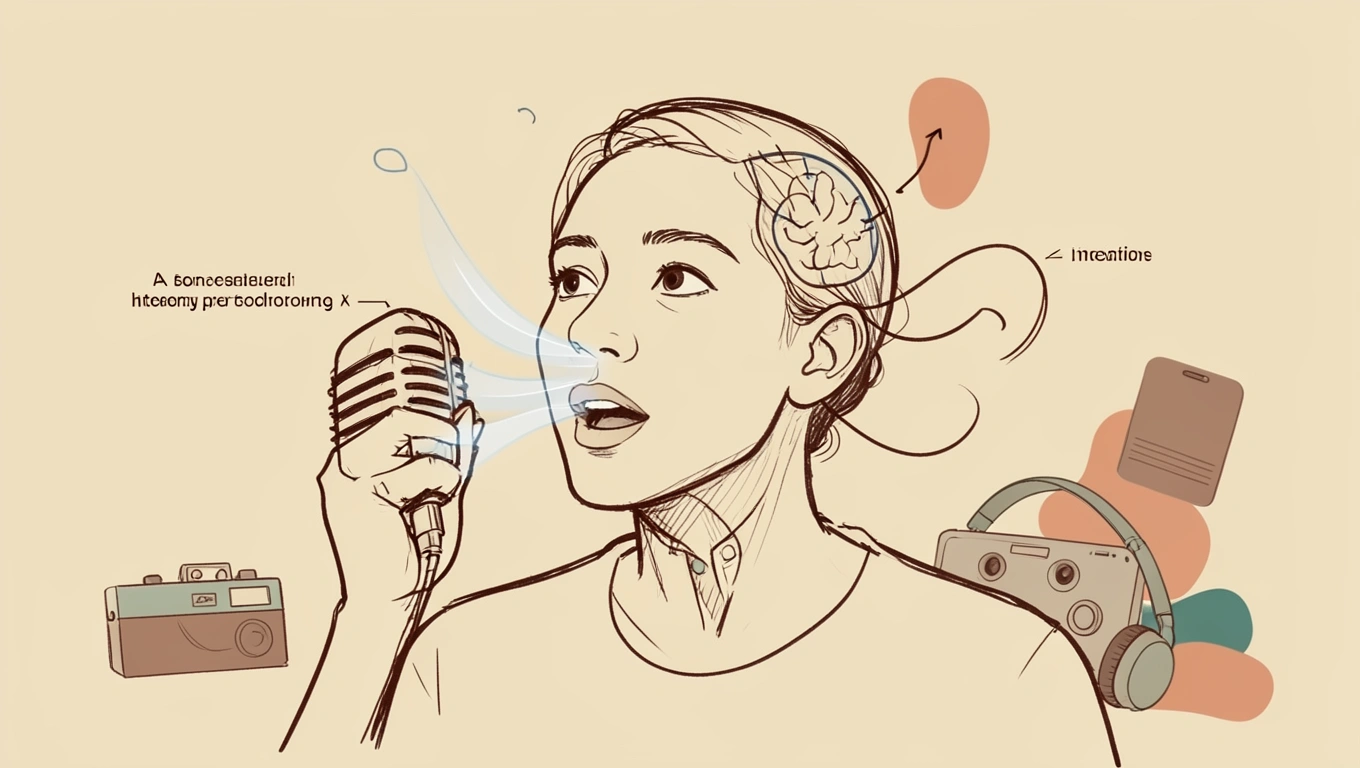
Have you ever cringed listening to a voicemail you left or a video where you spoke? That awkward feeling when your voice sounds nothing like what you expected is almost universal. The voice on the recording seems higher, thinner, and just plain wrong. It’s not your imagination, and the recording isn’t broken. The truth is, the voice on that recording is how everyone else has always heard you speak. Understanding why this happens reveals a fascinating quirk of human biology and physics that affects every single person. The disconnect between your internal perception and external reality comes down to how sound travels through your body versus through the air.
The Bone Conduction Factor
When you speak, sound waves travel through two different paths to reach your ears. The first path is external, just like when you hear someone else talk. Sound waves leave your mouth, travel through the air, and enter your ear canal. This is the only version of your voice that other people experience, and it’s exactly what a microphone captures during a recording.
The second path is internal and unique to your own perception. As you speak, vibrations travel through the bones and tissues of your skull directly to your inner ear. This phenomenon is called bone conduction, and it carries lower frequency sound waves particularly well. Your bones conduct these deeper tones straight to your cochlea, enriching the sound you perceive with bass frequencies that others never hear.
When you hear yourself speak in real time, your brain merges both the air-conducted and bone-conducted sound into one composite perception. This combination gives your voice that fuller, richer, deeper quality you’re accustomed to. A recording device, however, can only capture the air-conducted sound. Without the bone conduction component, the playback sounds thinner and higher-pitched, stripped of those low frequencies your skull normally transmits directly to your inner ear.
Why Your Brain Rejects the Recording
The discomfort you feel hearing your recorded voice goes beyond simple unfamiliarity. Your brain has spent your entire life building an internal model of what you sound like, and that model is based on the bone-plus-air combination. This internal reference has become deeply ingrained in your self-perception and identity.
When you hear the air-only version on a recording, your brain flags the mismatch immediately. The cognitive dissonance creates genuine discomfort because the voice doesn’t match your mental self-image. Research suggests this mismatch can even trigger mild identity confusion, as if you’re hearing a stranger speak your words. Your brain knows the voice is yours intellectually, but emotionally it feels foreign and wrong.
Everyone else, though, has only ever heard the air-conducted version of your voice. To them, the recording sounds perfectly normal and accurate. This is why friends and family often insist the recording sounds just like you, while you can’t stand it. They’re hearing the voice they’ve always known, while you’re hearing a version that contradicts years of internal feedback.
Next Level: Professional voice actors and public speakers deliberately practice listening to recordings of themselves regularly. This repeated exposure helps their brains adjust and accept the recorded version as legitimate, reducing the cringe factor and helping them make more accurate adjustments to their delivery. If you need to improve your speaking or presentation skills, recording yourself and reviewing the playback, despite the discomfort, is one of the most effective training tools available.
The Technical Side of Recording
Beyond the biological differences, the recording equipment itself plays a role in how your voice sounds on playback. Microphones have specific frequency response patterns, meaning they pick up certain sound frequencies better than others. A phone microphone, for instance, is optimized for speech intelligibility in the mid-range frequencies where human voices carry the most information, but it might not capture the full spectrum of your voice’s natural tones.
The recording environment also shapes the final sound. Hard surfaces like walls and floors reflect sound waves, creating echoes and reverberations that the microphone picks up along with your voice. A bathroom recording sounds different from one made outdoors because of these acoustic properties. Your own ears filter out and adjust to your environment’s acoustics automatically, but a microphone captures everything indiscriminately.
Audio compression adds another layer of alteration. Phone calls, voice messages, and most digital recordings use compression algorithms to reduce file sizes. These algorithms selectively remove certain frequencies and audio information, further changing the character of your voice from what even the microphone originally captured. What you hear in playback is your voice filtered through bone conduction loss, microphone limitations, room acoustics, and digital compression.
Getting Used to Your Real Voice
Accepting that the recorded version is actually how you sound to others takes time and exposure. The more you hear recordings of yourself, the less jarring they become. Your brain gradually builds familiarity with this external version, even if it never completely replaces your internal perception.
Some people find it helpful to think of their recorded voice as simply their external voice, separate from but equally valid as their internal experience. Both are real, just perceived through different mechanisms. The recorded version isn’t wrong or inferior, it’s just the objective reality that microphones and other people’s ears detect.
If you work in a field that requires regular recording or public speaking, investing in quality recording equipment can help. Better microphones capture a wider frequency range and more accurately represent your voice, reducing some of the tinny, unpleasant qualities that cheap microphones introduce. Professional audio setups also allow for adjustments to balance and tone that can produce a more natural sound.
Understanding the science behind the phenomenon can also reduce the emotional sting. Knowing that everyone experiences this disconnect, and that it’s rooted in basic physics and biology rather than some personal flaw in your voice, makes it easier to accept. Your voice isn’t actually unpleasant, it’s just different from what you expected because you’re hearing it the way everyone else always has.
Q&A
Do other people really hear me the way I sound on recordings?
Yes, the recorded version is essentially what others hear when you speak. They don’t have access to the bone-conducted sound that enriches your internal perception, so they only hear the air-conducted version that the microphone captures. What sounds strange to you is completely normal to everyone else.
Can I change how my voice sounds on recordings?
You can’t change the fundamental physics of how recording works, but you can improve the quality of recordings with better equipment and environments. Speaking techniques like projecting from your diaphragm, moderating your pace, and articulating clearly can also make your recorded voice sound more confident and pleasant, even if it still doesn’t match your internal perception.
Why do some people sound fine on recordings while I don’t?
Everyone experiences the bone conduction effect, but the degree of difference varies. People with deeper voices naturally have less discrepancy because their bone-conducted low frequencies are somewhat closer to their air-conducted sound. Also, people who have heard themselves recorded frequently have simply become more accustomed to their external voice and react less strongly to it.
Is the voice in my head when I think different from my speaking voice?
Your internal monologue is a different phenomenon entirely. That voice exists only in your mind and has no physical sound component at all. Your speaking voice, whether heard internally or on recording, involves actual vibrations and sound waves. The mental voice you hear when reading or thinking silently is a cognitive construct with no direct relationship to either version of your spoken voice.
For Conclusion
The unsettling experience of hearing your recorded voice is one of those universal human quirks that connects us all. It’s a reminder that our perception of ourselves, even something as basic as how we sound, is shaped by internal factors that others don’t share. The recorded voice isn’t wrong or unpleasant, it’s simply honest in a way that challenges the comfortable fiction our bones have been telling us.
Accepting your external voice doesn’t mean you have to love it immediately. It just means recognizing that this is the voice that carries your words, your humor, and your meaning to the people around you. They’ve been hearing this voice all along and connecting with you through it. The richness of your communication doesn’t come from low-frequency bone vibrations anyway. It comes from what you say, how you say it, and the genuine human connection you create. Your real voice, the one on the recording, has been doing that job just fine all along.